Biogas CHP: How It Works, Efficiency, Costs, and Use Cases
Understand biogas CHP systems: how they work, their efficiency, costs, and applications. Learn when to choose CHP vs. biomethane for optimal project ROI.
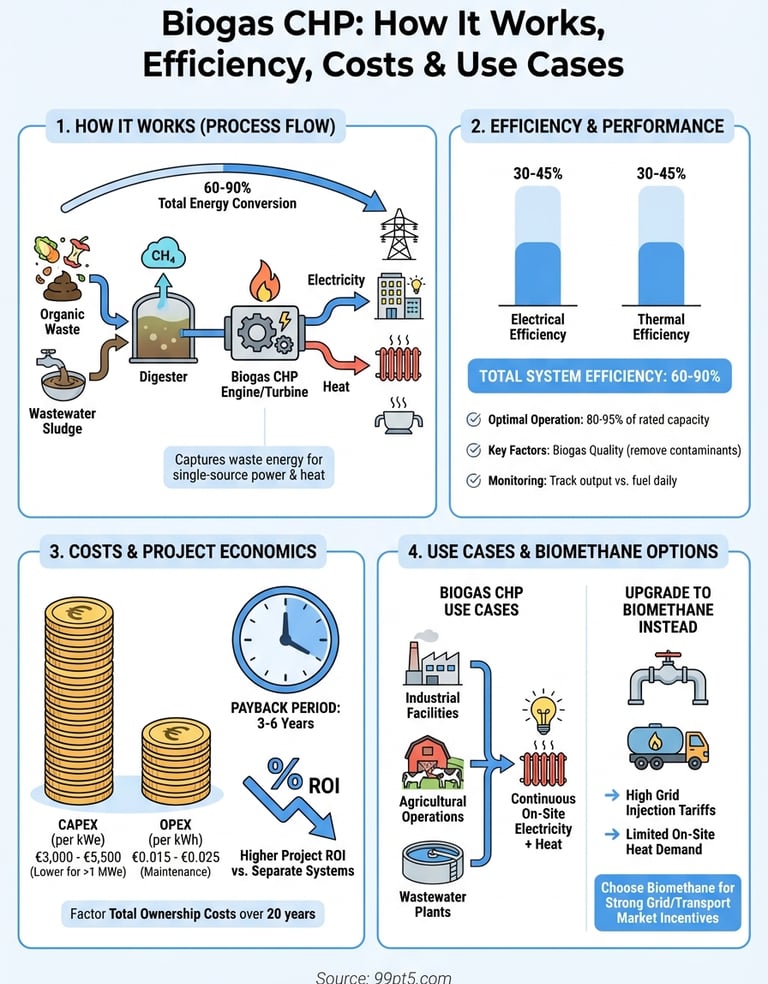
Biogas CHP (Combined Heat and Power) systems burn biogas in an engine or turbine to generate electricity and heat at the same time. This process captures waste energy that would otherwise escape through an exhaust stack. Instead of generating power and heat separately with different equipment, you get both from a single fuel source. The result is higher efficiency and lower operating costs compared to traditional energy systems.
This article walks you through everything you need to know about biogas CHP systems. You'll learn how these systems work, what efficiency levels to expect, typical costs and payback periods, and real applications across different industries. We'll also explain when upgrading biogas to biomethane makes more sense than direct CHP use, and how to evaluate which approach fits your project requirements.
Why biogas chp matters for your project
Your clients demand reliable energy solutions that reduce operating costs and meet carbon reduction targets. Biogas CHP delivers both by converting a waste stream into valuable electricity and heat. When you specify and install these systems, you offer higher project ROI and faster payback periods compared to systems that generate power or heat separately. This combination makes your proposals more competitive and helps secure contract approvals from finance teams and project stakeholders who scrutinize long-term economics.
Economic advantage over separate systems
Biogas CHP systems achieve thermal efficiencies above 80% by capturing waste heat from the engine or turbine. Separate generation of the same amount of power and heat requires more fuel and higher capital costs. Your clients save on equipment purchases, fuel consumption, and maintenance contracts when they consolidate both outputs into one system. These savings translate into shorter payback periods and stronger carbon credit generation, which increases project attractiveness for investors and funding bodies.
Capturing both electricity and heat from biogas reduces total energy costs by 20-40% compared to purchasing grid power and running dedicated boilers.
How to design and implement biogas chp
You start by analyzing your biogas composition and flow rate to determine the right engine or turbine size for your application. Your feedstock determines the methane content, which typically ranges from 50% to 75% in raw biogas. Higher methane content produces more power per cubic meter of gas, but you can achieve reliable operation across this range with proper equipment selection. Measure your continuous biogas production rate over several weeks to establish baseline data, because fluctuations affect system sizing and performance guarantees.
Match engine capacity to biogas supply
Your CHP unit must match your steady-state biogas production rather than peak flow rates. Oversized engines run inefficiently at partial load, while undersized units waste excess biogas through flaring. Calculate your average daily production and select an engine that operates at 80-95% of its rated capacity using that flow. You then install a gas buffer tank between the digester and engine to smooth out production variations throughout the day. This approach maximizes runtime hours and reduces wear from frequent starts and stops.
Size your biogas CHP engine to run continuously on average production, not peak flow, to achieve the highest annual efficiency and lowest maintenance costs.
Plan for heat integration and electrical connection
Your site layout determines how you capture and distribute the heat from the engine. Jacket cooling water reaches 80-90°C and works for district heating, process applications, or building comfort systems. Install insulated pipework that minimizes heat loss between the CHP unit and your heat loads. Electrical integration requires coordination with your local grid operator for grid connection approvals, metering, and protection relay settings. You also need to decide whether to export surplus electricity or size the system to match on-site consumption, because export tariffs and grid connection costs vary significantly between regions and can affect project economics by 15-25%.
Biogas chp efficiency and performance
Biogas CHP systems convert 60-90% of fuel energy into usable electricity and heat, significantly outperforming grid electricity paired with standalone boilers. Your electrical efficiency typically ranges from 30-45%, while thermal efficiency adds another 30-45% depending on engine technology and load conditions. These figures assume you capture and use all available heat from the engine cooling system and exhaust gases. Performance drops when you vent waste heat or run the engine below 70% of rated capacity, so matching system size to your actual load profile determines real-world efficiency.
Key factors that impact system efficiency
Your biogas quality directly affects engine performance and maintenance intervals. Higher methane content produces more power per unit of gas and creates less carbon buildup in the engine. Contaminants like hydrogen sulfide accelerate component wear and reduce reliability, which forces more frequent oil changes and valve adjustments. Installing gas conditioning equipment before the engine removes these contaminants and maintains consistent fuel quality. You also need to monitor siloxanes from organic waste sources, because they form abrasive deposits on cylinder heads and exhaust valves that cut engine life by 40-60% without proper treatment.
Regular biogas analysis and proper conditioning protect your engine investment and maintain efficiency levels above 85% throughout the system's operational life.
Monitor performance to maintain output levels
Track your electrical and thermal output against fuel consumption on a daily basis to identify efficiency degradation early. Modern CHP controllers log these parameters automatically and alert you when performance drops below target thresholds. Schedule preventive maintenance based on operating hours and fuel quality data rather than fixed calendar intervals, because biogas composition variations affect wear rates more than runtime alone. This approach reduces unplanned downtime and keeps your system operating at design efficiency for longer periods between major overhauls.
Biogas chp costs and project economics
Your capital investment for biogas CHP projects typically ranges from €3,000 to €5,500 per kilowatt of electrical capacity, depending on system size and site complexity. Smaller installations under 250 kWe cost more per kilowatt because fixed equipment costs spread across less output capacity. Larger systems above 1 MWe achieve economies of scale through standardized components and reduced installation time per unit of power. These figures include the engine generator set, heat recovery equipment, electrical switchgear, and basic gas conditioning, but exclude digesters or biomethane upgrading equipment if required for your specific application.
Factor in total ownership costs
Your operating expenses consist of fuel costs (if purchasing biogas), maintenance contracts, insurance, and grid connection fees. Budget €0.015 to €0.025 per kilowatt-hour for scheduled maintenance, which covers oil changes, filter replacements, and annual inspections. Engine overhauls occur every 60,000 to 80,000 operating hours depending on fuel quality and load patterns, adding €200 to €400 per kilowatt to your lifecycle costs. Projects with high-quality biogas and consistent loading patterns achieve lower maintenance costs at the bottom of this range, while variable loads or contaminated fuel push expenses higher.
Calculate your total cost of ownership over 20 years, not just initial capital, because maintenance and fuel quality drive long-term profitability more than purchase price.
Evaluate payback and return metrics
Biogas CHP systems typically achieve payback periods of 3 to 6 years when displacing grid electricity and fossil fuel heating. Your actual payback depends on avoided energy costs, government incentives, and carbon credit revenue. Calculate your internal rate of return using conservative assumptions for energy prices and maintenance costs to stress-test project viability under different market conditions.
Biogas chp use cases and biomethane options
Biogas CHP fits industrial facilities, agricultural operations, and wastewater treatment plants where you need continuous electricity and heat on site. Food processors run these systems to offset grid costs while capturing heat for cooking, sterilization, or drying processes. Dairy farms pair biogas CHP with manure digesters to power milking operations and heat barns or pasteurization equipment.
When to upgrade biogas to biomethane instead
Upgrading biogas to biomethane makes sense when your grid injection tariffs exceed combined heat and power values or when you lack sufficient heat loads on site. Your location relative to gas pipeline infrastructure determines feasibility and connection costs for injection projects.
Biomethane systems require higher capital investment but deliver better economics in regions with strong renewable gas incentives or vehicle fuel markets that pay premium prices for compressed natural gas alternatives.
Choose biomethane upgrading over biogas CHP when your site has limited heat demand but strong grid injection incentives or access to premium transport fuel markets.
Select the right option for your feedstock
Your organic waste composition influences whether direct biogas CHP or biomethane upgrading delivers better project returns. Landfill gas contains more contaminants that increase upgrading costs, making CHP more attractive. Agricultural digesters produce cleaner biogas that upgrades efficiently to pipeline quality, opening more revenue options through grid injection or transport fuel sales.
Next steps for biogas chp
You now understand how biogas CHP systems deliver efficient power and heat generation from organic waste streams. Your next step involves carefully evaluating your biogas quality, continuous production rates, and on-site energy loads to determine the right system configuration for your specific project requirements. Explore high-performance biogas processing solutions that maximize methane recovery and reduce operating costs while meeting your project specifications, environmental targets, and client performance expectations.