VOC Removal: What It Is, How It Works, and Key Technologies
Learn what is VOC removal and compare thermal, catalytic, and carbon technologies to find the right system for your air, water, or biogas operation.
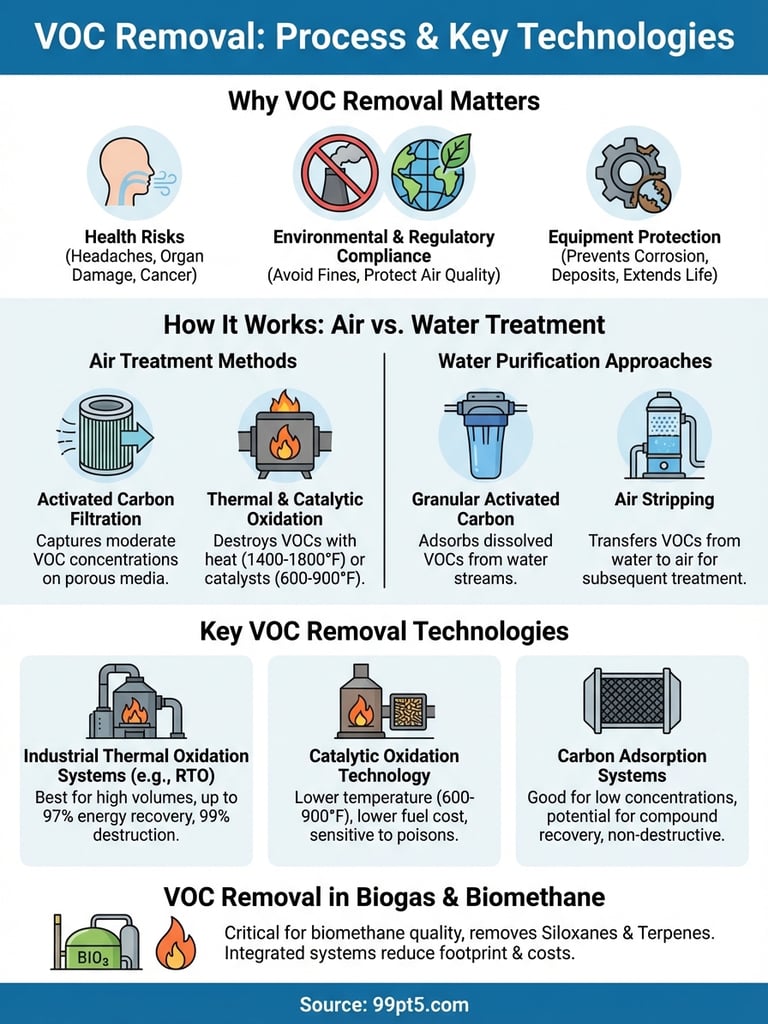
VOC removal is the process of eliminating volatile organic compounds from air or water using specialized technologies. These compounds evaporate easily at room temperature and come from sources like industrial processes, cleaning products, paints, and fuel. In biogas operations, VOCs can contaminate your gas streams and reduce the quality of biomethane. Removing them protects equipment, meets regulatory standards, and ensures you deliver pipeline quality gas. The removal process typically involves activated carbon filtration, thermal oxidation, or catalytic systems that capture or destroy these compounds before they escape into the atmosphere or compromise your product.
This guide explains how VOC removal works and which technologies deliver the best results for different applications. You'll learn about air purification systems that protect indoor environments, water treatment methods that eliminate dissolved organics, and industrial oxidizers designed for high volume gas streams. We'll cover what to consider when choosing a removal system and how VOC control fits into biogas and biomethane production. Whether you're designing a new facility or upgrading existing equipment, understanding these fundamentals helps you make informed decisions that improve performance and reduce operating costs.
Why VOC removal matters
Understanding what is VOC removal becomes critical when you consider the serious consequences of leaving these compounds unchecked. VOCs threaten human health through both short-term and long-term exposure, causing immediate symptoms like headaches, dizziness, and respiratory irritation. Over extended periods, certain VOCs increase your risk of liver damage, kidney problems, and even cancer. In industrial settings, concentrated VOC emissions create hazardous working conditions that put your employees at risk and expose you to liability.
Regulatory compliance and environmental impact
You face strict regulations regarding VOC emissions across most jurisdictions. Environmental agencies set specific limits on how much you can release into the atmosphere, and violations result in fines, shutdowns, or permit revocations. In biogas operations, uncontrolled VOC emissions contribute to ground-level ozone formation and smog, which damages air quality in surrounding communities. Your facility's environmental footprint improves dramatically when you implement effective removal systems that capture these compounds before they escape.
Regulatory non-compliance doesn't just cost money in fines; it damages your reputation and limits your ability to expand operations.
Protection of equipment and product quality
VOCs corrode metal components, degrade seals, and form deposits inside your processing equipment. Equipment lifespan decreases significantly when exposed to aggressive organic compounds over time, leading to unexpected failures and costly repairs. In biomethane production, even trace amounts of VOCs contaminate your final product and prevent it from meeting pipeline quality specifications. Your downstream customers require clean fuel that burns efficiently without releasing harmful emissions, which means thorough VOC removal directly affects your market access and revenue potential.
How to remove VOCs from air and water
Removing VOCs requires different approaches depending on whether you're treating air streams or water sources. Air-based removal focuses on capturing or destroying gaseous compounds before they enter your environment or escape to the atmosphere. Water treatment targets dissolved organic compounds that contaminate liquid streams. Both methods rely on physical, chemical, or biological processes that either trap VOCs on filter media, break them down into harmless byproducts, or convert them into less volatile forms. Your choice of method depends on the concentration levels, specific compounds present, and whether you need continuous treatment or periodic purification.
Air treatment methods
Activated carbon filtration provides the most common solution for removing VOCs from air in both residential and industrial settings. You pass contaminated air through beds of specially treated carbon that contains millions of tiny pores, which trap organic molecules through a process called adsorption. The carbon holds VOCs on its surface until it reaches saturation, at which point you replace or regenerate the filter media. This method works best for moderate VOC concentrations and offers the advantage of capturing compounds without destroying them, allowing for potential recovery in some applications.
Thermal and catalytic oxidation systems destroy VOCs by heating them to high temperatures in controlled environments. Thermal oxidizers burn organic compounds at 1,400 to 1,800°F, converting them into carbon dioxide and water vapor. Catalytic systems achieve the same result at lower temperatures (600 to 900°F) by using precious metal catalysts that accelerate the oxidation reaction. Industries processing large air volumes prefer these methods because they handle high VOC loads and eliminate disposal concerns associated with saturated carbon filters.
Your operating costs decrease significantly when you select the right removal technology for your specific VOC concentration and air volume.
Water purification approaches
Granular activated carbon filters remove dissolved VOCs from water through the same adsorption principles that work for air treatment. Water flows through carbon beds that capture organic compounds as they pass, producing clean effluent suitable for discharge or reuse. You'll find this method effective for low to moderate concentrations of VOCs in water, and it requires minimal energy input compared to other options. Regular monitoring ensures you replace carbon before breakthrough occurs, which would allow VOCs to pass through untreated.
Air stripping transfers VOCs from water to air by forcing the two phases into contact in a tower packed with specialized media. Contaminated water enters at the top while clean air flows upward from the bottom, causing volatile compounds to evaporate into the air stream. You then treat the VOC-laden air using carbon filters or oxidation before releasing it. This technology handles higher VOC concentrations efficiently and produces water that meets stringent discharge standards.
Key technologies for VOC removal
Your selection from available VOC removal technologies determines how effectively you eliminate compounds, how much energy you consume, and what operating costs you face over time. Industrial applications typically require robust systems that handle high volumes and concentrations, while commercial and residential settings need compact solutions that operate quietly with minimal maintenance. Understanding what is voc removal means knowing which technology matches your specific parameters, including VOC type, concentration levels, air or water flow rates, and space constraints. The right system delivers guaranteed performance while minimizing both capital investment and ongoing expenses.
Industrial thermal oxidation systems
Regenerative thermal oxidizers (RTOs) dominate large-scale industrial VOC removal because they achieve 99% destruction efficiency while recovering up to 97% of thermal energy. Your contaminated air stream passes through ceramic media beds that store heat, enters a combustion chamber where VOCs oxidize at 1,400 to 1,600°F, then exits through another ceramic bed that captures heat for the next cycle. This continuous heat exchange reduces fuel consumption dramatically compared to systems without regeneration. You'll find RTOs ideal when processing high air volumes with moderate VOC concentrations, particularly in coating operations, printing facilities, and chemical manufacturing.
Thermal recuperative oxidizers use metal heat exchangers instead of ceramic media to preheat incoming air with hot exhaust gases. These systems operate similarly to RTOs but typically recover only 60 to 70% of thermal energy, resulting in higher fuel costs. Your choice between recuperative and regenerative designs depends on balancing capital investment against long-term operating expenses, with recuperative systems offering lower upfront costs for smaller installations.
Catalytic oxidation technology
Catalytic oxidizers destroy VOCs at temperatures between 600 and 900°F by passing contaminated air over precious metal catalysts that accelerate oxidation reactions. You achieve the same destruction efficiency as thermal systems while consuming significantly less fuel because of the lower operating temperature. These units work best when your VOC stream remains free of catalyst poisons like silicones, sulfur compounds, and heavy metals that deactivate the catalyst bed. Processing clean gas streams in pharmaceutical manufacturing, food production, and semiconductor fabrication makes catalytic systems an efficient choice.
Selecting catalytic technology over thermal oxidation cuts your fuel costs by 50% or more when you maintain proper catalyst conditions.
Carbon adsorption systems
Activated carbon filters capture VOCs through physical adsorption rather than destruction, making them suitable for applications where you need to recover valuable compounds or handle intermittent operations. Your air or water passes through carbon beds containing billions of microscopic pores that trap organic molecules on their surface. Systems use either disposable cartridges for small-scale applications or regenerable carbon beds for industrial installations where you desorb captured VOCs with steam or hot air. You'll prefer carbon systems when dealing with low VOC concentrations or when thermal methods would waste energy during periods of low contamination.
VOC removal in biogas and biomethane plants
Understanding what is voc removal in biogas contexts requires recognizing that anaerobic digestion produces more than just methane and carbon dioxide. Your raw biogas contains trace volatile organic compounds from feedstock breakdown, including siloxanes from personal care products, terpenes from plant materials, and halogenated compounds from cleaning agents. These VOCs survive the digestion process and travel with your gas stream, threatening downstream equipment and preventing your biomethane from meeting injection standards. Removing them becomes essential before compression, upgrading, or grid connection.
Common VOC contaminants in biogas
Siloxanes pose the greatest threat to your biogas equipment because they convert to silicon dioxide during combustion, forming abrasive deposits on engine components, turbine blades, and heat exchangers. Feedstocks containing sewage sludge or food waste introduce these compounds from cosmetics, detergents, and food packaging. Your removal system must target siloxanes specifically because standard upgrading processes don't eliminate them. Terpenes and aromatic compounds from agricultural feedstocks create odor issues and reduce fuel quality, requiring activated carbon stages or catalytic treatment before your biomethane reaches custody transfer points.
Integration with upgrading systems
Modern biomethane plants integrate VOC removal with CO2 separation and trace contaminant control in single compact systems rather than using separate treatment stages. You achieve higher efficiency by positioning catalytic reactors after oxygen injection and before final drying, which allows controlled oxidation of VOCs at medium pressure. This integrated approach reduces footprint, eliminates multiple compression stages, and ensures your product meets pipeline specifications for total hydrocarbons while maintaining guaranteed methane recovery rates.
Integrated VOC removal eliminates separate treatment stages and reduces your capital costs by 30% compared to standalone purification systems.
How to choose a VOC removal system
Selecting the right VOC removal system requires matching technology capabilities to your specific application parameters rather than choosing based on price alone. You need to analyze your VOC composition, concentration levels, air or water flow rates, and available space before evaluating equipment options. Understanding what is voc removal means knowing that different technologies excel at different tasks, and mismatched systems waste money through excessive energy consumption, frequent maintenance, or failure to meet performance guarantees. Your selection process should prioritize systems that deliver guaranteed results while minimizing total cost of ownership over the equipment's operational life.
Assess your VOC characteristics
Compound identification determines which removal technology will work effectively for your application. You must test your gas or water streams to identify specific VOCs present, their concentrations, and whether any catalyst poisons or filter-blocking substances exist in the mixture. Siloxanes require different treatment than simple hydrocarbons, and halogenated compounds need special handling to prevent corrosive byproducts. Your laboratory analysis reveals whether you need thermal destruction, catalytic oxidation, or carbon adsorption to achieve required removal rates.
Calculate operating costs vs capital investment
Energy consumption and filter replacement costs determine your long-term expenses, which often exceed initial equipment prices over a system's lifetime. You should calculate annual operating costs for each technology option by estimating fuel use, electricity consumption, carbon replacement frequency, and maintenance requirements. Systems with higher capital costs frequently deliver lower operating expenses through energy recovery or extended service intervals, making them more economical over ten to twenty years of operation.
Your total ownership cost over ten years matters more than the purchase price when selecting industrial VOC removal equipment.
Final thoughts
Understanding what is voc removal gives you the foundation to protect your operations, meet regulatory standards, and deliver quality products. The right removal system eliminates health risks, prevents equipment damage, and ensures your gas or water streams meet specifications. Whether you need activated carbon filters for residential air quality or industrial oxidizers for high-volume biogas processing, matching technology to your specific VOC profile and operating conditions delivers the best results.
Investment in proper VOC removal pays back through reduced maintenance costs, avoided regulatory penalties, and improved product value. Companies processing biogas into biomethane particularly benefit from integrated systems that handle multiple contaminants while maintaining high methane recovery rates. Your choice should prioritize guaranteed performance and lowest total ownership cost over the equipment's lifetime.
Contact 99pt5 to learn how our BioTreater™ system delivers 99.5% emission reduction with the lowest operating expenses in the industry.