What Are Fugitive Emissions? Sources, Monitoring & Control
What are fugitive emissions? Discover their impact, common sources, and essential methods for detection & control to safeguard your biogas operation.
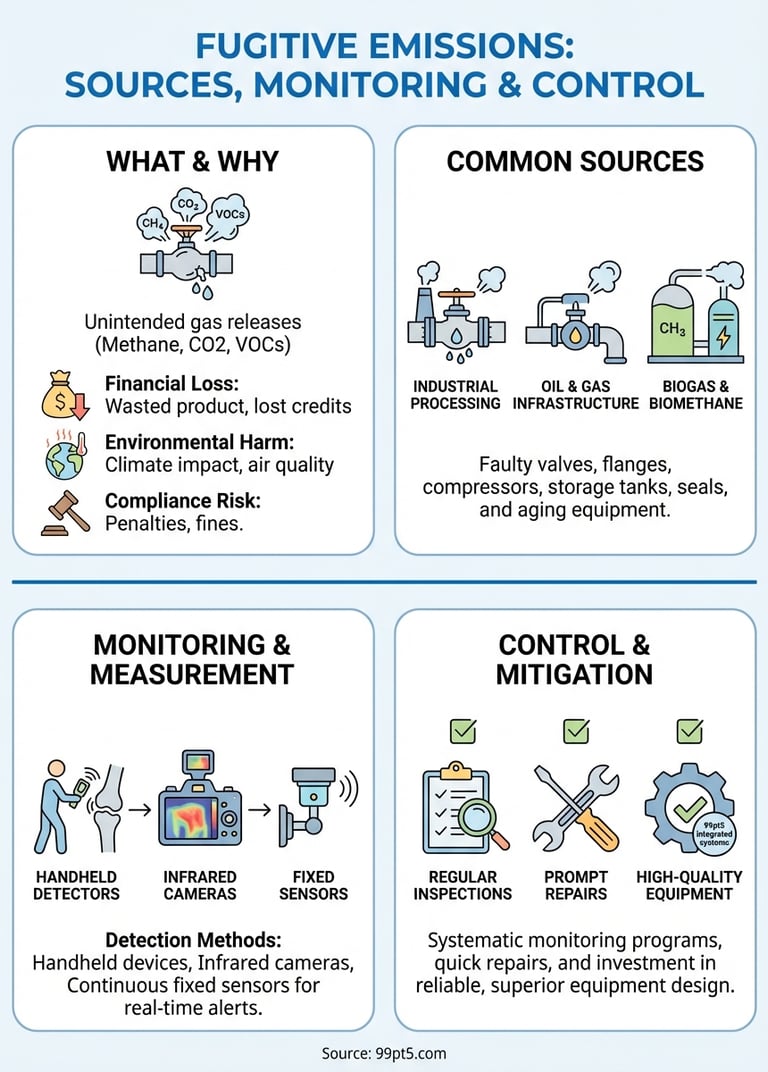
Fugitive emissions are unintended releases of gases and vapors that escape from industrial equipment and infrastructure. Unlike controlled emissions from combustion or intentional venting, these leaks happen through faulty valves, pipe connections, storage tanks, and other processing equipment. The gases include methane, carbon dioxide, and volatile organic compounds. You might not see them, but they cost you money and harm the environment. In biogas operations, even small leaks can waste valuable biomethane and reduce your plant's efficiency.
This article explains where fugitive emissions come from and why they matter to your operation. You'll learn practical methods to detect and measure these leaks, understand the most common problem areas in biogas and biomethane facilities, and discover what regulations require you to monitor and report. Whether you're running a farm digester or managing a large anaerobic digestion facility, controlling fugitive emissions protects your revenue and keeps you compliant with environmental standards.
Why fugitive emissions matter
Understanding what are fugitive emissions helps you recognize their impact on your bottom line and the environment. These leaks represent wasted product that you could sell or use for energy generation. In biogas operations, every cubic meter of methane that escapes reduces your revenue and increases your operating costs. You're essentially paying to produce gas that disappears before it generates value. The financial losses compound over time, especially when methane prices rise or when you factor in lost carbon credit opportunities.
Financial impact on operations
Fugitive emissions directly affect your plant's profitability. Methane leaks cost you money in multiple ways: lost fuel sales, reduced electricity generation, and decreased carbon credit values. Your facility might lose 2-5% of total production through undetected leaks, which translates to thousands of dollars annually for small operations and millions for larger plants. You also face higher maintenance costs when leaks indicate failing equipment that will require expensive emergency repairs if left unaddressed.
Environmental and climate consequences
Methane carries 28 times the warming potential of carbon dioxide over a 100-year period and 84 times more over 20 years. Your facility's fugitive emissions contribute to climate change more significantly than the same volume of CO2 would. These releases also degrade local air quality, creating health risks for workers and nearby communities through exposure to volatile organic compounds and other harmful gases.
Controlling fugitive emissions protects both your investment and the environment while demonstrating responsible operation to stakeholders and regulators.
Compliance and regulatory risk
Regulators increasingly require you to monitor and report fugitive emissions. Your operation faces penalties and fines if you exceed emission thresholds or fail to implement detection programs. You risk losing operating permits when inspections reveal systematic leaks or inadequate monitoring procedures. These compliance failures damage your reputation and can halt production until you resolve the violations.
How to monitor and measure fugitive emissions
You need systematic approaches to detect and quantify leaks in your biogas facility. Monitoring what are fugitive emissions requires both direct measurement techniques and calculation-based methods, depending on your equipment, budget, and regulatory requirements. Your monitoring program should balance accuracy with practicality, focusing resources on the highest-risk areas where leaks most commonly occur. The goal is to identify problems before they become costly or create compliance issues.
Detection methods and technologies
Your facility can use handheld gas detectors to screen potential leak sources during routine inspections. These portable instruments measure methane concentrations around valves, flanges, and connections, providing immediate readings that help you prioritize repairs. You walk through your plant with the detector, checking each component systematically. Infrared cameras offer a more advanced option that visualizes gas plumes invisible to the naked eye, allowing you to scan large areas quickly and identify leaks you might otherwise miss. These cameras work particularly well for outdoor equipment and piping networks where manual screening would take hours.
Fixed monitoring systems provide continuous surveillance of critical areas. You install permanent sensors at high-risk locations that automatically alert you when concentrations exceed set thresholds. This approach catches intermittent leaks that occur only under specific operating conditions, such as pressure changes or temperature fluctuations.
Measurement approaches and calculations
Direct measurement involves capturing and quantifying the actual gas flow from a leak point using specialized equipment. You position a hood or enclosure over the leak source and measure the volume of gas escaping per unit time. This method gives you the most accurate emission rates but requires equipment access and can be time-intensive for facilities with thousands of potential leak points.
Calculation methods use emission factors based on equipment type, size, and operating conditions to estimate leak rates without direct measurement.
Emission factors come from regulatory databases like those maintained by the EPA, which provide standardized values for different component types. You multiply these factors by your equipment count to estimate total facility emissions. This approach works well for baseline assessments and regulatory reporting, though it may over or underestimate actual leaks at your specific site.
Implementing a monitoring program
Your program should establish inspection frequencies based on equipment criticality and leak history. High-pressure systems and aging components require more frequent checks than newer, lower-risk equipment. You create inspection routes, train operators to recognize leak indicators, and maintain detailed records of findings and repairs. Regular audits verify that your monitoring procedures remain effective as your facility expands or equipment ages.
Common sources and examples
Understanding what are fugitive emissions requires knowing where they typically occur across different industries. Your facility likely contains multiple potential leak sources, each with varying risk levels and emission rates. Equipment types and operating conditions determine which sources pose the greatest concern. The most common culprits include processing equipment with moving parts, high-pressure systems, and aging infrastructure that degrades over time.
Industrial processing equipment
Valves represent the largest source of fugitive emissions in most processing facilities, accounting for up to 60% of total leaks. Your plant's valve population experiences constant wear from thermal cycling, pressure fluctuations, and mechanical operation. Flanges and connections create additional leak points wherever pipes join or equipment connects. You find these at pump seals, compressor packings, and pressure relief devices. Each connection point creates a potential escape route for gases, especially when gaskets deteriorate or bolts loosen from vibration.
Oil and gas infrastructure
Pipeline systems leak methane during extraction, processing, and transportation of natural gas. Your facility's compressors and storage tanks develop leaks through seal failures and structural degradation. Wellhead equipment experiences particularly high leak rates due to harsh operating conditions and remote locations that delay maintenance. Pressure control equipment releases gases during normal operation when relief valves open to prevent overpressurization.
Natural gas systems lose an estimated 2-5% of production through fugitive emissions, representing both environmental damage and lost revenue.
Mining and waste management operations
Coal mining releases trapped methane from underground seams through ventilation shafts and abandoned mine workings. Your waste management facilities produce fugitive emissions from decomposing organic matter in landfills and wastewater treatment systems. Agricultural operations contribute through livestock manure storage and soil management practices. These sources often receive less attention than industrial facilities but release significant quantities of methane and nitrous oxide into the atmosphere.
Fugitive emissions in biogas and biomethane plants
Your biogas facility faces unique challenges when addressing what are fugitive emissions due to the biological nature of the process and the specialized equipment required. Anaerobic digesters operate under constant pressure, creating numerous opportunities for methane to escape through aging seals, deteriorating gaskets, and worn mechanical components. The upgrading equipment that processes raw biogas into biomethane introduces additional leak sources through compression systems, filtration units, and purification membranes. These leaks directly reduce your facility's output and profitability while releasing potent greenhouse gases into the atmosphere.
Critical leak points in digesters and upgrading systems
Digesters themselves develop leaks at cover seals and penetration points where pipes, mixers, and monitoring equipment enter the vessel. Your gas collection system experiences losses at header pipes, condensate traps, and pressure control valves. The biogas upgrading process creates multiple high-risk areas: compressor seals leak during compression stages, membrane housings develop cracks under pressure cycling, and water scrubber systems release dissolved methane through venting operations.
Your facility's desulfurization equipment introduces another leak source, particularly at activated carbon vessels and chemical dosing systems. Connection points between process stages multiply opportunities for fugitive emissions, especially where flexible hoses attach to rigid piping or where equipment requires frequent disconnection for maintenance.
Regular inspection of upgrading equipment prevents small leaks from becoming major emission sources that compromise your biomethane quality and reduce sellable output.
Impact on biomethane quality and production
Leaks upstream of your upgrading system reduce the raw biogas volume available for processing, directly cutting your biomethane production capacity. You lose revenue on every cubic meter that escapes before purification. Air ingress through the same leak points that allow gas escape introduces oxygen into your system, creating explosion risks and forcing you to install additional safety equipment. This contamination degrades your final product quality, potentially causing you to miss pipeline injection specifications or renewable natural gas certification requirements. Your facility must then reprocess or waste batches that fail quality standards, further increasing costs and reducing operational efficiency.
Regulation and reporting obligations
Your facility faces increasing regulatory scrutiny over fugitive emissions as governments worldwide tighten controls on greenhouse gas releases. Compliance requirements vary by jurisdiction, but most developed nations now mandate monitoring and reporting for facilities that exceed specific emission thresholds. You must understand which regulations apply to your operation and establish systems to track emissions accurately. Failure to comply results in substantial fines, permit revocations, and potential operational shutdowns that can cost far more than implementing proper monitoring programs.
EPA greenhouse gas reporting requirements
The Environmental Protection Agency (EPA) requires U.S. facilities emitting more than 25,000 metric tons of CO2 equivalent annually to report under the Greenhouse Gas Reporting Program. Your biogas or biomethane operation must submit detailed annual reports documenting fugitive emissions from all equipment sources. Subpart W specifically addresses petroleum and natural gas systems, including anaerobic digesters and biogas upgrading facilities. You need verified gas imaging equipment for leak detection and must attempt repairs within 30 days of identifying leaks. Each detected leak requires documentation showing detection dates, repair attempts, and final resolution confirmation.
Regulatory frameworks continue evolving toward stricter monitoring requirements, making early investment in detection systems a strategic advantage for your operation.
International standards and compliance frameworks
European facilities follow EU Methane Regulation requirements that mandate regular inspections and leak detection programs. Your operation must conduct quarterly surveys of major equipment and monthly checks of high-risk components. Carbon pricing mechanisms in various jurisdictions create financial incentives to reduce emissions, as each ton of leaked methane increases your carbon tax liability or reduces available credits. Many countries now require third-party verification of emission reports, adding audit costs and administrative burden when understanding what are fugitive emissions becomes critical to demonstrating compliance and avoiding penalties.
Key takeaways
Understanding what are fugitive emissions helps you protect your facility's profitability and environmental performance. These unintended gas releases cost you money through lost product, create regulatory compliance risks, and contribute significantly to climate change through methane's potent warming effect. Your biogas or biomethane operation needs systematic monitoring programs that detect leaks early, before they escalate into major financial or environmental problems.
Effective control requires reliable equipment designed to minimize leak points and regular inspection protocols that catch issues quickly. Companies like 99pt5 build integrated biogas processing systems engineered to petroleum industry standards, reducing fugitive emission risks through superior design and construction quality. Your investment in proper monitoring and high-quality equipment pays dividends through increased biomethane recovery, lower operating costs, and confident regulatory compliance.